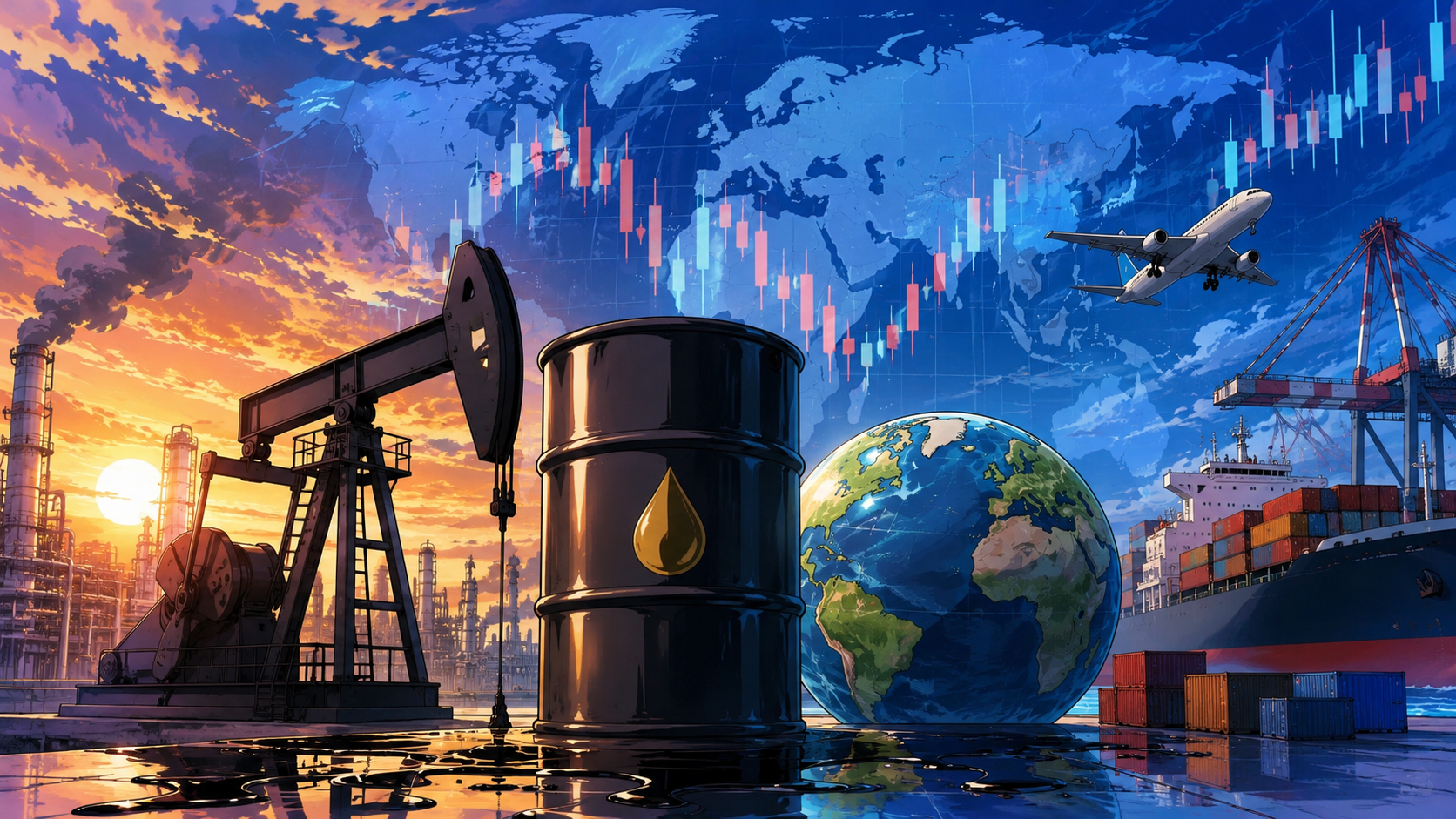
Oil is often called the “lifeblood” of the modern global economy. From transportation and manufacturing to electricity generation and international trade, oil influences almost every sector of economic activity. When oil prices rise or fall, the effects spread rapidly across nations, industries, governments, and households. Even in an age of renewable energy and digital transformation, crude oil remains one of the world’s most strategically important commodities.
The global economy in 2026 continues to demonstrate how closely economic stability is tied to oil markets. Geopolitical conflicts, supply disruptions, inflationary pressures, and changes in global demand have once again shown that oil prices are not merely an energy issue but a worldwide economic concern. Recent tensions in the Middle East and disruptions around the Strait of Hormuz pushed oil prices sharply upward, increasing fears of inflation and slower global growth.

Understanding why oil prices affect the global economy requires examining how oil interacts with production, transportation, trade, inflation, employment, investment, and government policy. Oil prices influence not only energy-producing nations but also importing countries, financial markets, and consumers worldwide.
Oil as a Foundation of Modern Economic Activity
Oil is essential because modern economies depend heavily on energy. Industries require fuel to produce goods, transport raw materials, and distribute products globally. Cars, ships, airplanes, factories, agricultural machinery, and construction equipment all rely directly or indirectly on petroleum products.
When oil prices increase, production and transportation become more expensive. Businesses face higher operational costs, which are often passed on to consumers through increased prices. This process affects food, clothing, electronics, and nearly every consumer product.
Countries with large industrial sectors are particularly vulnerable to oil price fluctuations. Manufacturing-based economies depend on affordable energy to remain competitive in international markets. If oil prices rise significantly, export costs increase and economic growth may slow.
Oil also plays a critical role in global value chains. Modern trade networks rely on shipping and transportation systems powered by petroleum fuels. Research on global trade patterns has shown that oil prices significantly shape the structure of international trade and global labor division.
The Relationship Between Oil Prices and Inflation
One of the strongest links between oil prices and the global economy is inflation. Inflation refers to the general increase in prices over time. Since oil is a basic input in production and transportation, rising oil prices usually increase the cost of goods and services.
When fuel prices rise, transportation companies charge more for shipping. Airlines increase ticket prices. Farmers spend more on diesel fuel and fertilizers. Factories pay more for energy. These higher costs eventually reach consumers in the form of increased prices for daily necessities.
This phenomenon is known as “cost-push inflation.” Central banks often struggle to control such inflation because it originates from rising production costs rather than excessive consumer demand.
In 2026, economists and financial institutions warned that persistent high oil prices could intensify global inflationary pressures. The International Monetary Fund projected that rising energy prices would contribute to higher global inflation and slower economic growth.
Higher inflation reduces purchasing power. Consumers can buy fewer goods and services with the same income. This weakens consumer demand and slows economic activity. Low-income households suffer the most because energy and food represent a larger share of their spending.
Impact on Economic Growth
Oil prices directly affect economic growth. Moderate oil prices generally support stable economic expansion, while extremely high prices often reduce growth rates.
When oil becomes expensive, businesses reduce investment because operational costs rise and profits decline. Consumers also cut spending on non-essential goods due to higher fuel and energy expenses. This decline in consumption and investment can slow national and global economic growth.
The IMF warned in 2026 that sustained oil prices above $100 per barrel could push the world economy toward recession under severe geopolitical scenarios.
Oil-importing countries are especially vulnerable. Nations like India, Japan, and many European economies depend heavily on imported crude oil. When oil prices rise, these countries spend more foreign currency on energy imports, weakening trade balances and reducing economic stability.
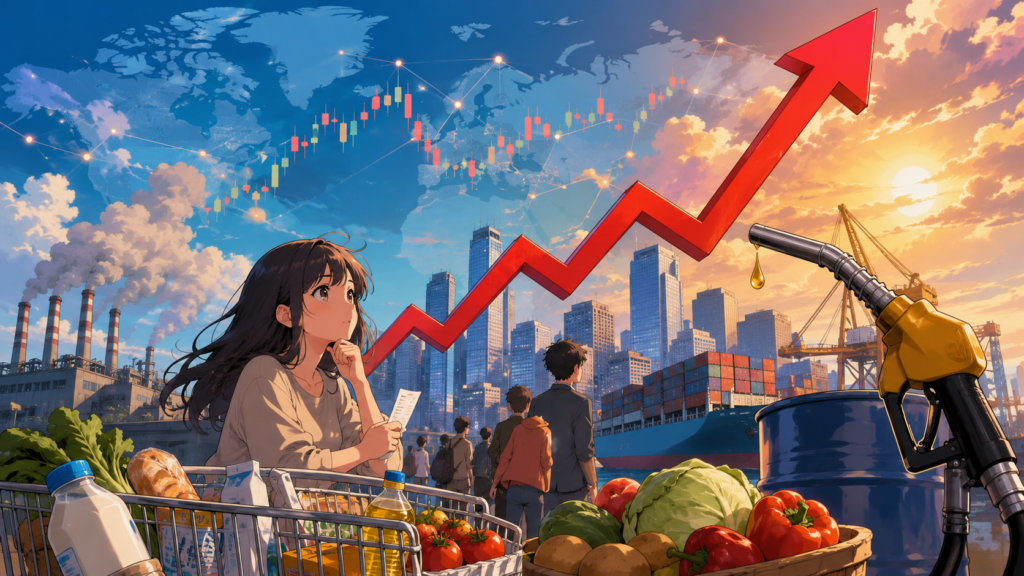
For example, economic analyses suggested that a prolonged oil shock in 2026 could slow India’s economic growth and increase pressure on public finances and banking systems.
However, oil-exporting countries may benefit from higher prices. Nations such as Saudi Arabia, Russia, and certain Gulf countries earn more revenue from oil exports during price increases. This additional income can strengthen government budgets and economic activity in those regions.
Thus, oil price changes create winners and losers within the global economy.
Oil Prices and Transportation Costs
Transportation is one of the sectors most affected by oil prices. Modern globalization depends on affordable transportation networks connecting producers and consumers worldwide.
Ships transport raw materials and finished products across oceans. Trucks distribute goods domestically. Airlines connect global tourism and business activities. All these systems depend heavily on fuel derived from crude oil.
When oil prices increase sharply, transportation becomes more expensive. Shipping companies raise freight charges. Airlines impose fuel surcharges. Public transportation costs may rise. Logistics expenses increase for businesses.
As a result, the prices of imported goods rise globally. Countries dependent on international trade experience greater economic pressure.
Recent disruptions in oil supply routes demonstrated how transportation systems quickly react to oil market instability. Shipping disruptions around the Strait of Hormuz in 2026 caused concerns about higher fuel prices and increased global transportation costs.
Higher transportation costs also affect food security because agricultural products rely on global supply chains. Rising fuel costs can therefore contribute to food inflation and social instability in vulnerable countries.
Influence on Financial Markets
Oil prices strongly influence financial markets, including stock markets, bond markets, and currency exchange rates.
Investors closely monitor oil prices because they affect corporate profits, inflation, and interest rates. Rising oil prices often create uncertainty in financial markets.
Energy companies may benefit from higher crude prices because their revenues increase. However, industries dependent on fuel—such as airlines, manufacturing, and transportation—may experience lower profits.
Oil price increases also affect inflation expectations. Central banks may raise interest rates to control inflation caused by expensive energy. Higher interest rates can reduce investment and borrowing, slowing economic activity.

In 2026, financial analysts observed that rising oil prices were influencing global financial strategies, interest-rate expectations, and investor behavior.
Currency markets are also affected. Oil-exporting countries may experience stronger currencies due to increased export earnings, while oil-importing countries often face currency depreciation because they spend more on imports.
This relationship between oil prices and financial systems demonstrates how energy markets influence global economic stability beyond the energy sector itself.
Oil Prices and Government Policies
Governments around the world closely monitor oil prices because energy costs influence economic stability, public satisfaction, and political decision-making.
When oil prices rise sharply, governments may face public pressure to reduce fuel taxes or provide subsidies. Many developing countries subsidize fuel prices to protect consumers from sudden increases. However, subsidies can place enormous pressure on government budgets.
Oil-importing countries may experience widening fiscal deficits because they spend more on energy imports and subsidy programs. This reduces funds available for healthcare, education, and infrastructure development.
Meanwhile, oil-exporting nations may experience higher government revenues during oil booms. Some countries use this income to fund development projects, social programs, and sovereign wealth funds.
Oil prices also influence monetary policy. Central banks may increase interest rates to fight inflation caused by rising energy costs. However, higher interest rates can slow economic growth and increase unemployment.
The World Bank and IMF warned in 2026 that prolonged oil price shocks could force governments and central banks to adopt stricter economic policies to manage inflation and financial risks.
Geopolitical Tensions and Oil Markets
Oil markets are highly sensitive to geopolitical tensions because major oil reserves and shipping routes are concentrated in politically unstable regions.
Conflicts in the Middle East, sanctions, wars, and diplomatic disputes can disrupt oil production and transportation. Even the fear of supply disruption can increase oil prices dramatically.
The Strait of Hormuz is one of the world’s most important oil transit routes. A large percentage of global oil shipments pass through this narrow waterway. Any disruption in the region creates immediate concern in global markets.
In 2026, tensions involving Iran and disruptions in shipping routes caused significant increases in global oil prices. Analysts warned that continued instability could push oil prices to extremely high levels.
Geopolitical oil shocks are especially dangerous because they combine supply shortages with uncertainty and investor fear. Economic studies show that geopolitical oil price shocks often create stronger negative effects than ordinary market fluctuations.
Such crises can weaken industrial production, increase inflation, and reduce global economic confidence.
Oil Prices and Employment
Oil prices affect employment in multiple sectors of the economy.
When oil prices rise moderately, oil-producing industries may expand and create jobs in exploration, drilling, refining, and energy services. Oil-exporting countries often experience economic growth during such periods.
However, extremely high oil prices can reduce employment in fuel-dependent industries such as aviation, manufacturing, tourism, and logistics. Businesses facing higher operating costs may reduce hiring or lay off workers.
Consumers also reduce discretionary spending when energy costs rise, affecting retail, hospitality, and entertainment industries. Lower consumer demand can therefore contribute to rising unemployment.
Economic forecasts in 2026 suggested that prolonged high oil prices could weaken labor markets in several countries.
Thus, oil price fluctuations influence both industrial employment and broader labor market conditions.
Oil Prices and Developing Countries
Developing countries are often more vulnerable to oil price shocks because they have limited financial resources and strong dependence on imported energy.
Higher oil prices increase transportation and electricity costs, making industrialization more difficult. Inflation rises rapidly in many developing economies because energy expenses affect food and daily necessities.
Poor households are disproportionately affected because fuel and food consume a larger portion of their income. Rising oil prices can therefore increase poverty and inequality.
Developing countries may also face trade deficits because oil imports become more expensive. Governments may borrow heavily to finance energy imports and fuel subsidies, increasing debt burdens.
At the same time, oil-exporting developing countries may experience temporary economic growth during periods of high oil prices. However, overdependence on oil revenues can create long-term economic instability if prices later collapse.
Therefore, oil price volatility creates major development challenges for emerging economies.
Renewable Energy and the Future of Oil Dependence
The transition toward renewable energy is gradually changing the global economy’s relationship with oil. Solar power, wind energy, electric vehicles, and battery technologies are reducing dependence on fossil fuels in some sectors.
However, oil remains essential for transportation, petrochemicals, aviation, shipping, and industrial production. Global demand for oil continues despite growth in renewable energy technologies.
The International Energy Agency noted in 2026 that although long-term energy transitions are underway, global oil demand remains significant and supply disruptions still strongly affect economic conditions.
High oil prices may accelerate investment in renewable energy because governments and businesses seek alternatives to expensive fossil fuels. Electric vehicles and clean energy technologies become more attractive when gasoline and diesel prices rise.
At the same time, sudden oil shocks can destabilize economies before renewable systems are fully capable of replacing petroleum dependence.
The future global economy will likely involve a gradual reduction in oil dependence rather than an immediate transition away from fossil fuels.
Conclusion
Oil prices affect the global economy because oil remains deeply connected to production, transportation, trade, inflation, employment, financial markets, and government policies. Changes in oil prices influence nearly every aspect of economic life, from household expenses to international trade balances.
Rising oil prices often increase inflation, reduce consumer purchasing power, slow economic growth, and create uncertainty in financial markets. Oil-importing countries suffer from higher energy costs and trade deficits, while oil-exporting nations may temporarily benefit from increased revenues.
Geopolitical tensions continue to make oil markets highly unstable. Events in major oil-producing regions can rapidly influence global prices and economic confidence. Recent developments in 2026 once again demonstrated how vulnerable the world economy remains to disruptions in energy supply.
Although renewable energy is expanding, the modern global economy still depends heavily on crude oil. As long as transportation, manufacturing, and international trade rely on petroleum-based energy systems, oil prices will remain one of the most powerful forces shaping global economic conditions.
The relationship between oil and the global economy therefore reflects a broader truth: energy is not simply a commodity but a foundation of modern civilization and economic development.
FAQs: Why Oil Prices Affect the Global Economy
1. Why do oil prices affect the global economy?
Oil prices affect the global economy because oil is essential for transportation, manufacturing, trade, and energy production. Changes in oil prices influence inflation, production costs, and economic growth worldwide.
2. How do rising oil prices increase inflation?
Higher oil prices increase transportation and production costs. Businesses often pass these costs to consumers, leading to higher prices for goods and services.
3. Why are developing countries more affected by oil price increases?
Developing countries often rely heavily on imported oil and have limited financial resources. Rising oil prices increase inflation, transportation costs, and government spending pressures.
4. How do oil prices impact transportation costs?
Fuel is a major expense for airlines, shipping companies, and trucking industries. When oil prices rise, transportation costs increase, affecting global trade and product prices.
5. Can high oil prices slow economic growth?
Yes, high oil prices can reduce consumer spending and business investment because energy and transportation become more expensive, slowing economic activity.
6. Why do stock markets react to oil price changes?
Oil prices influence corporate profits, inflation expectations, and investor confidence. Rising oil prices can create uncertainty in financial markets.
7. How do oil-prices affect food prices?
Agriculture depends on fuel, fertilizers, and transportation. Higher oil prices increase farming and delivery costs, leading to higher food prices.
8. Which countries benefit from high oil-prices?
Oil-exporting countries such as Saudi Arabia, Russia, and some Gulf nations often benefit because they earn more revenue from crude oil exports.
9. Why do geopolitical conflicts affect oil-prices?
Many major oil reserves and shipping routes are located in politically sensitive regions. Wars, sanctions, or conflicts can disrupt oil supply and increase prices.
10. How do oil-prices influence unemployment?
High oil-prices can increase business costs, leading some companies to reduce hiring or cut jobs, especially in transportation and manufacturing sectors.