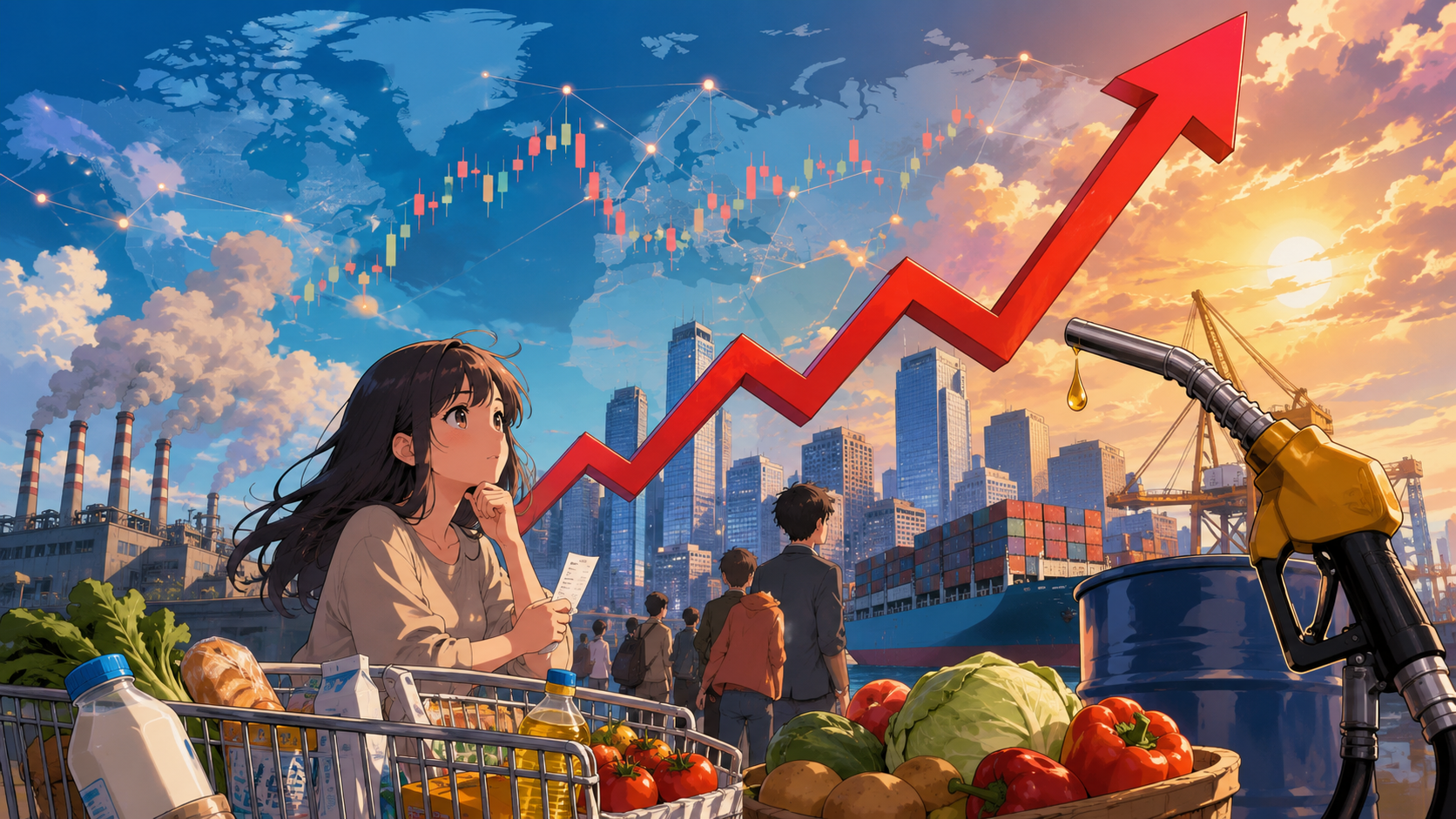
Introduction on Inflation in Modern Economies
Inflation is one of the most discussed concepts in modern economics because it directly affects the daily lives of people, businesses, and governments. When inflation rises, consumers pay more for food, fuel, housing, education, healthcare, and transportation. At the same time, the purchasing power of money declines, meaning that the same amount of money buys fewer goods and services than before. Inflation also influences wages, investments, savings, employment, and economic growth.
In modern economies, inflation is not caused by a single factor. It emerges from a complex interaction between demand, supply, monetary policy, fiscal policy, global trade, labor markets, expectations, and geopolitical events. Economists generally agree that moderate inflation is normal and even beneficial for economic growth. However, when inflation becomes too high or unstable, it creates uncertainty and weakens economic stability.

According to the International Monetary Fund (IMF), inflation refers to the general rise in prices across an economy over time. Demand-side pressures, supply shortages, expansionary policies, and inflation expectations are major drivers of inflation in modern economies.
Meaning of Inflation
Inflation is the sustained increase in the average price level of goods and services over a period of time. It is usually measured through indices such as:
- Consumer Price Index (CPI)
- Wholesale Price Index (WPI)
- Producer Price Index (PPI)
When inflation rises, the real value of money falls. For example, if inflation is 8% annually, a product costing ₹100 today may cost ₹108 next year.
A moderate level of inflation is often considered healthy because it encourages spending and investment. However, excessive inflation can reduce savings, increase inequality, and destabilize the economy.
Types of Inflation in Modern Economies
Modern economies experience different forms of inflation depending on the source of price increases.
Demand-Pull Inflation
Demand-pull inflation occurs when aggregate demand in an economy rises faster than aggregate supply. In simple terms, too much money chases too few goods.
This type of inflation commonly occurs during periods of strong economic growth, rising employment, and increasing consumer confidence. When households and businesses spend heavily, producers may struggle to meet demand, leading to higher prices.
Economists describe this situation as excess demand in the economy. Expansionary monetary and fiscal policies can also contribute to demand-pull inflation.
Cost-Push Inflation
Cost-push inflation occurs when the cost of production rises. Businesses then transfer these increased costs to consumers through higher prices.
Important causes include:
- Increase in wages
- Rising fuel prices
- Expensive raw materials
- Supply chain disruptions
- Increased transportation costs
The global inflation surge after the COVID-19 pandemic demonstrated the impact of supply-side disruptions. Rising energy prices and logistical bottlenecks increased production costs across many industries.
Built-In Inflation
Built-in inflation develops when workers and businesses expect prices to continue rising in the future. Employees demand higher wages to maintain purchasing power, and businesses raise prices to compensate for higher labor costs.
This creates a wage-price spiral in which wages and prices continuously push each other upward. Inflation expectations play a crucial role in this process.
Major Causes of Inflation in Modern Economies
Expansionary Monetary Policy
One of the most important causes of inflation is excessive growth in the money supply. Central banks increase liquidity by lowering interest rates or injecting money into the economy.
When interest rates are low:
- Borrowing becomes cheaper
- Consumer spending rises
- Businesses invest more
- Demand increases rapidly
If production cannot expand at the same pace, prices begin to rise.
Monetarist economists such as Milton Friedman argued that inflation is fundamentally linked to excessive money supply growth. Modern central banks therefore closely monitor inflation while adjusting interest rates.
Research suggests that prolonged expansionary monetary policy can permanently increase inflation if demand exceeds productive capacity.
Excessive Government Spending
Governments often increase spending during recessions or economic crises to stimulate growth. While fiscal expansion can support employment and demand, excessive government expenditure may create inflationary pressures.
Large public spending programs increase household income and purchasing power. If supply does not increase proportionately, prices rise.
Fiscal deficits financed through borrowing or money creation may intensify inflation over time. Several economists argue that poor fiscal discipline can weaken inflation control efforts.
Supply Chain Disruptions
Modern economies are highly interconnected through global trade networks. Disruptions in supply chains can significantly increase inflation.
Examples include:
- Pandemic lockdowns
- Shipping delays
- Factory shutdowns
- Shortage of semiconductors
- Port congestion
- War-related disruptions
The COVID-19 pandemic exposed the vulnerability of global supply systems. Many industries faced shortages of raw materials and intermediate goods, causing production costs to rise sharply.
Supply-side inflation became especially severe in sectors dependent on global logistics.
Rising Energy Prices
Energy prices strongly influence inflation because oil, gas, and electricity are essential inputs for transportation and production.
When fuel prices rise:
- Transportation becomes expensive
- Manufacturing costs increase
- Food prices rise
- Utility costs expand
Oil shocks have historically caused inflationary crises across the world. The Russia–Ukraine conflict, for example, contributed to sharp increases in energy and food prices globally.
Energy inflation often spreads throughout the economy because almost every industry depends on fuel and electricity.
Wage Increases and Labor Market Pressures
Labor costs are a major component of production expenses. When workers demand higher wages, businesses may increase prices to maintain profits.
This situation becomes more common when:
- Unemployment is low
- Labor shortages exist
- Trade unions negotiate higher salaries
- Minimum wages increase
While higher wages improve living standards, rapid wage growth without productivity gains can create inflationary pressure.
Economists refer to this process as wage-push inflation.
Inflation Expectations
Modern economies are heavily influenced by expectations. If consumers believe prices will rise in the future, they may increase spending today. Businesses may also raise prices preemptively.
Expected inflation can therefore become self-fulfilling.
For example:
- Workers demand higher salaries
- Businesses increase prices
- Consumers buy earlier
- Investors seek inflation hedges
Central banks try to manage inflation expectations through communication and credible policy measures. Stable expectations help maintain economic confidence.
Currency Depreciation
A weaker currency can increase inflation by making imported goods more expensive.
Modern economies rely heavily on imports such as:
- Petroleum
- Machinery
- Electronics
- Food products
- Industrial materials
When exchange rates decline, import costs rise, increasing domestic prices.
Developing countries are particularly vulnerable because many depend on imported fuel and industrial goods. Currency depreciation can therefore trigger imported inflation.
Globalization and International Markets
Inflation today is not purely domestic. International markets strongly affect national price levels.
Global inflation may spread through:
- Commodity prices
- International shipping costs
- Trade restrictions
- Exchange rate fluctuations
- Global demand shifts
For example, rising wheat prices in international markets can increase food inflation in importing countries.
Modern economies are therefore influenced by both domestic and global economic conditions.
Role of Central Banks
Central banks play a crucial role in controlling inflation.
Major tools include:
- Interest rate adjustments
- Open market operations
- Reserve requirements
- Inflation targeting
When inflation rises excessively, central banks usually increase interest rates to reduce borrowing and spending.
Higher interest rates:
- Reduce consumer demand
- Slow investment
- Encourage savings
- Stabilize prices
Institutions such as the Reserve Bank of India and the Federal Reserve use monetary policy to maintain price stability.
Inflation targeting has become a major policy framework in modern economies. However, supply shocks sometimes reduce the effectiveness of monetary policy.
Inflation After the COVID-19 Pandemic
The post-pandemic period provides a significant example of modern inflation dynamics.
Several factors combined simultaneously:
- Massive fiscal stimulus
- Low interest rates
- Supply chain disruptions
- Labor shortages
- Rising energy prices
- Strong consumer demand
Some economists argue that demand-side factors played a dominant role, while others emphasize supply constraints. Research presented at the European Central Bank conference suggested that demand shocks were highly influential in the inflation surge after the pandemic.
The pandemic demonstrated that inflation in modern economies often results from multiple interacting causes rather than a single source.
Effects of Inflation on the Economy

Decline in Purchasing Power
Inflation reduces the purchasing power of money. Consumers can buy fewer goods and services with the same income.
Low-income households suffer the most because they spend a larger share of income on necessities.
Impact on Savings
High inflation reduces the real value of savings. If inflation exceeds interest rates, savers lose purchasing power over time.
Business Uncertainty
Unstable inflation creates uncertainty for businesses regarding costs, pricing, and investment decisions.
Income Inequality
Inflation can widen inequality because wage growth often fails to match rising prices for vulnerable groups.
Impact on Economic Growth
Moderate inflation may encourage growth, but excessive inflation reduces economic efficiency and investor confidence.
Inflation in Developing Economies
Developing economies often experience inflation differently from advanced economies.
Common causes include:
- Food shortages
- Fuel dependence
- Weak currency
- Fiscal deficits
- Infrastructure problems
- Agricultural disruptions
Countries like India frequently face food inflation due to monsoon failures, supply bottlenecks, and transportation challenges.
Developing nations are also more vulnerable to global commodity price shocks because of heavy dependence on imports.
Can Inflation Ever Be Beneficial?
A small level of inflation is generally considered beneficial for economic growth.
Moderate inflation:
- Encourages spending
- Supports investment
- Reduces debt burden
- Promotes production
- Helps wage adjustments
Most central banks target inflation around 2% to 4%.
However, very high inflation damages economic stability and reduces public confidence in financial systems.
Measures to Control Inflation
Governments and central banks use several methods to reduce inflation.
Monetary Measures
- Increasing interest rates
- Reducing money supply
- Tightening credit conditions
Fiscal Measures
- Reducing government expenditure
- Increasing taxes
- Lowering fiscal deficits
Supply-Side Measures
- Improving infrastructure
- Enhancing productivity
- Reducing import dependence
- Strengthening supply chains
Trade Policies
- Reducing import tariffs
- Increasing availability of essential goods
- Stabilizing exchange rates
Administrative Measures
Governments sometimes impose:
- Price controls
- Export restrictions
- Subsidies
- Buffer stock policies
However, long-term inflation control requires balanced economic management rather than temporary interventions.
Sociological Dimensions of Inflation
Inflation is not only an economic issue but also a social phenomenon.
Rising prices affect:
- Living standards
- Social inequality
- Employment patterns
- Consumer behavior
- Family structures
Persistent inflation may create social unrest, labor strikes, and political dissatisfaction.
In modern societies, inflation also influences mental stress, financial insecurity, and migration patterns. Urban poor populations are particularly vulnerable because housing, transportation, and food costs rise rapidly during inflationary periods.
Conclusion
Inflation in modern economies results from a combination of demand-side pressures, supply-side constraints, monetary expansion, fiscal policies, labor market dynamics, global trade disruptions, and public expectations. Demand-pull inflation arises when aggregate demand exceeds productive capacity, while cost-push inflation occurs due to rising production costs. Built-in inflation develops through wage-price spirals and inflation expectations.
The modern global economy has made inflation more complex than in earlier periods. Events such as pandemics, wars, energy crises, and supply chain disruptions can quickly spread inflation across countries. At the same time, expansionary fiscal and monetary policies may intensify inflationary pressures if not carefully managed.
Central banks and governments therefore play a crucial role in maintaining price stability through balanced monetary and fiscal policies. Moderate inflation may support economic growth, but uncontrolled inflation can weaken purchasing power, increase inequality, and create economic instability.
Understanding the causes of inflation is essential for economists, policymakers, businesses, and citizens because inflation directly shapes economic life in modern societies. Through effective policy coordination, productivity growth, and stable economic institutions, modern economies can reduce inflationary risks while supporting sustainable development.
FAQs on Inflation in Modern Economies
1. What is Inflation in Modern Economies?
Inflation in Modern Economies refers to the continuous rise in the general price level of goods and services over time, reducing the purchasing power of money.
2. What are the main causes of Inflation in Modern Economies?
The major causes include excessive money supply, rising demand, supply chain disruptions, high fuel prices, wage increases, and expansionary government policies.
3. How does Inflation in Modern Economies affect consumers?
Inflation reduces purchasing power, increases living costs, and makes essential goods such as food, fuel, and housing more expensive.
4. What is demand-pull Inflation in Modern Economies?
Demand-pull inflation occurs when consumer demand becomes higher than the available supply of goods and services in the economy.
5. What is cost-push Inflation in Modern Economies?
Cost-push inflation happens when production costs like wages, fuel, and raw materials rise, forcing businesses to increase prices.
6. How do central banks control Inflation in Modern Economies?
Central banks control inflation by increasing interest rates, reducing money supply, and tightening credit policies.
7. Why did Inflation in Modern Economies rise after COVID-19?
Post-pandemic inflation increased due to supply chain disruptions, labor shortages, high energy prices, and large government stimulus spending.
8. How does Inflation in Modern Economies affect savings?
High inflation reduces the real value of savings because money loses purchasing power over time.
9. Can moderate Inflation in Modern Economies be beneficial?
Yes, moderate inflation can encourage investment, spending, production, and economic growth when kept under control.
10. What role do fuel prices play in Inflation in Modern Economies?
Fuel prices influence transportation and production costs, which directly affect the prices of goods and services.
11. How does globalization impact Inflation in Modern Economies?
Globalization spreads inflation through international trade, commodity prices, shipping costs, and exchange rate fluctuations.
12. Why are developing countries more vulnerable to Inflation in Modern Economies?
Developing countries often depend heavily on imports and face supply shortages, weak currencies, and infrastructure challenges.
13. How does Inflation in Modern Economies affect businesses?
Inflation increases production costs, creates uncertainty, and may reduce business profits and investment confidence.
14. What is the relationship between wages and Inflation in Modern Economies?
When wages rise faster than productivity, businesses may increase prices, contributing to wage-push inflation.
15. What are the long-term effects of Inflation in Modern Economies?
Long-term inflation can increase inequality, reduce economic stability, weaken savings, and create social and political tensions.
2 thoughts on “What Causes Inflation in Modern Economies?”