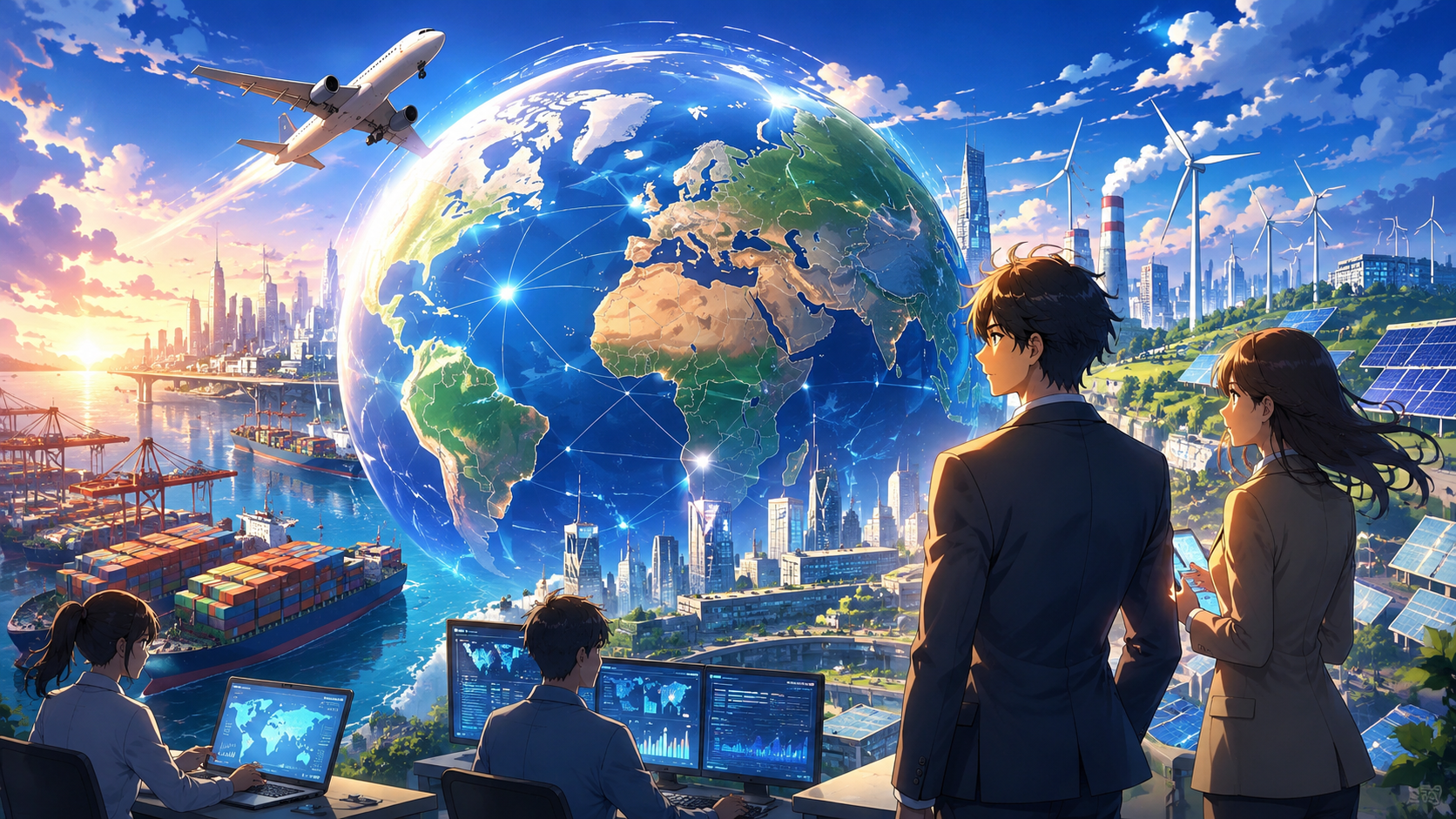
Globalization has entered a new phase in 2026. The era of unrestricted free trade and rapid economic integration is no longer the dominant model of the global economy. Instead, the world is experiencing a more complex form of globalization shaped by technology, geopolitical rivalry, regional economic cooperation, digital finance, supply-chain diversification, and environmental concerns. The world economy in 2026 reflects both deep interdependence and increasing fragmentation.
The process of globalization refers to the growing interconnectedness of countries through trade, investment, communication, migration, technology, and cultural exchange. For decades, globalization accelerated economic growth by expanding markets, reducing production costs, and increasing international cooperation. However, recent events such as the COVID-19 pandemic, trade conflicts, inflation crises, geopolitical wars, and energy disruptions have transformed the structure of the global economy.
In 2026, globalization continues to influence almost every aspect of economic life, from international trade and artificial intelligence to labor migration and digital currencies. Yet globalization today is not identical to the version that dominated the 1990s and early 2000s. Nations are now balancing economic openness with strategic national interests.
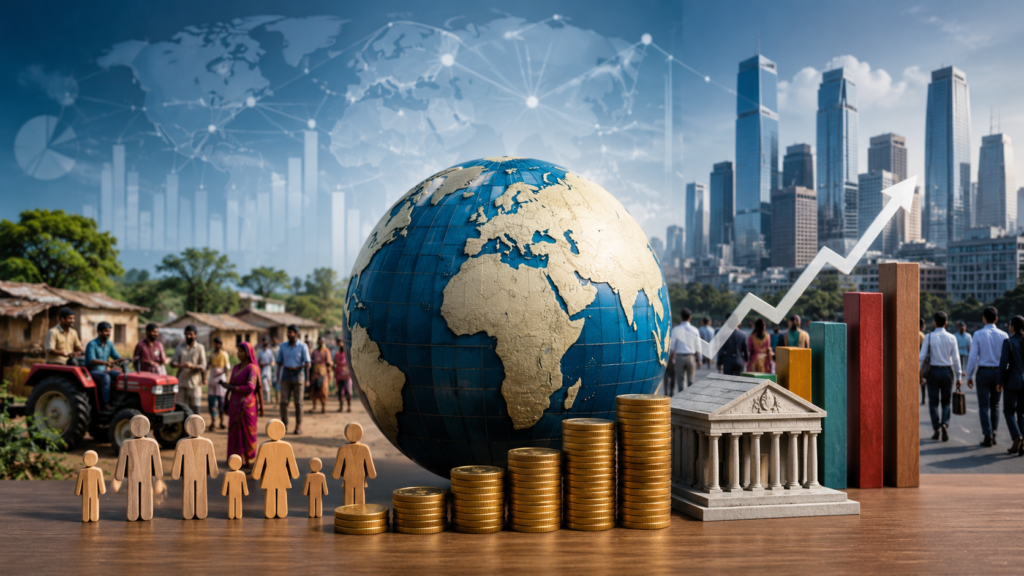
According to the International Monetary Fund (IMF), global economic growth in 2026 is projected around 3.1%–3.3%, reflecting moderate resilience despite geopolitical instability and trade tensions.
Table of Contents
Meaning of Globalization in the Modern Economy
Globalization in 2026 can be understood as the worldwide integration of economies through:
- International trade
- Cross-border investment
- Digital technology
- Global supply chains
- Financial integration
- Labor mobility
- Cultural exchange
Modern globalization is highly dependent on digital infrastructure. Cloud computing, artificial intelligence, e-commerce platforms, fintech systems, and remote work technologies have expanded the scope of global economic interaction. Even small businesses can now access international markets through digital platforms.
Unlike earlier phases of globalization that focused mainly on manufacturing and physical trade, the current phase emphasizes data, technology, innovation, and services.
Historical Evolution of Globalization
The roots of globalization can be traced back to ancient trade routes such as the Silk Road. However, modern globalization expanded rapidly after World War II with the establishment of international institutions like the International Monetary Fund (IMF), World Bank, and General Agreement on Tariffs and Trade (GATT), which later became the World Trade Organization (WTO).
Three major phases shaped globalization:
1. Industrial Globalization
This phase focused on manufacturing expansion and international trade in goods during the nineteenth and twentieth centuries.
2. Financial Globalization
After the 1980s, capital markets became increasingly interconnected. Foreign direct investment (FDI), multinational corporations, and global banking systems expanded rapidly.
3. Digital Globalization
The current era is characterized by data flows, digital platforms, AI-driven production, and international online services.
In 2026, digital globalization is the most influential form of economic integration.
Major Characteristics of the World Economy in 2026
Technological Transformation
Artificial intelligence is one of the strongest economic forces shaping globalization in 2026. AI-driven automation, robotics, and machine learning are increasing productivity across industries.
Technology investment has become a major driver of global growth.
Countries investing heavily in AI infrastructure, semiconductor manufacturing, and digital services are gaining economic advantages. The United States, China, India, Japan, and South Korea are among the major technological powers.
Supply Chain Diversification
The pandemic and geopolitical conflicts exposed weaknesses in highly concentrated supply chains. As a result, companies are diversifying production locations.
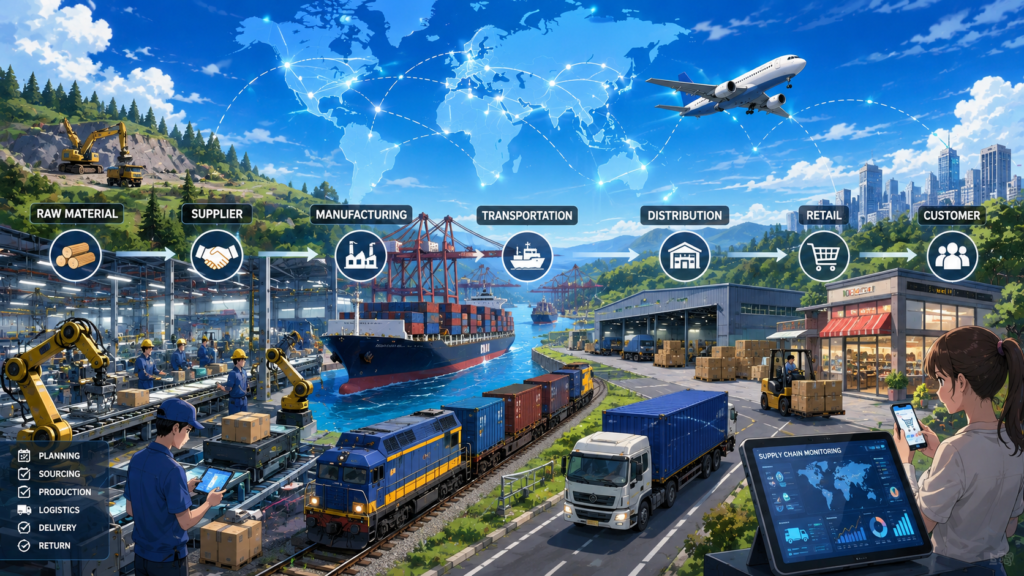
Businesses now follow strategies such as:
- China Plus One
- Nearshoring
- Friendshoring
- Regional manufacturing hubs
India, Vietnam, Mexico, and Indonesia have become important manufacturing alternatives.
Rise of Regionalization
Globalization in 2026 increasingly operates through regional economic blocs rather than purely global integration.
Examples include:
- European Union (EU)
- Regional Comprehensive Economic Partnership (RCEP)
- African Continental Free Trade Area (AfCFTA)
- USMCA in North America
Regional trade agreements are helping countries reduce dependency on unstable global markets.
Green Economic Transition
Climate change policies strongly influence economic globalization. Countries are investing in renewable energy, electric vehicles, green hydrogen, and sustainable manufacturing.
Environmental regulations now affect international trade patterns. Carbon taxes and green production standards are becoming major components of economic policy.
Digital Trade Expansion
Digital services trade has grown significantly. Online education, software services, remote consulting, fintech platforms, streaming services, and digital banking contribute heavily to the world economy.
Cross-border data flows now generate enormous economic value.
The Role of International Organizations
International Monetary Fund (IMF)
The IMF plays a key role in stabilizing the global economy by providing financial assistance, economic monitoring, and policy recommendations.
The IMF warns that geopolitical conflicts and energy disruptions remain major threats to global growth in 2026.
World Trade Organization (WTO)
The WTO continues to regulate international trade rules, though it faces serious challenges related to trade disputes, tariffs, and institutional reform.
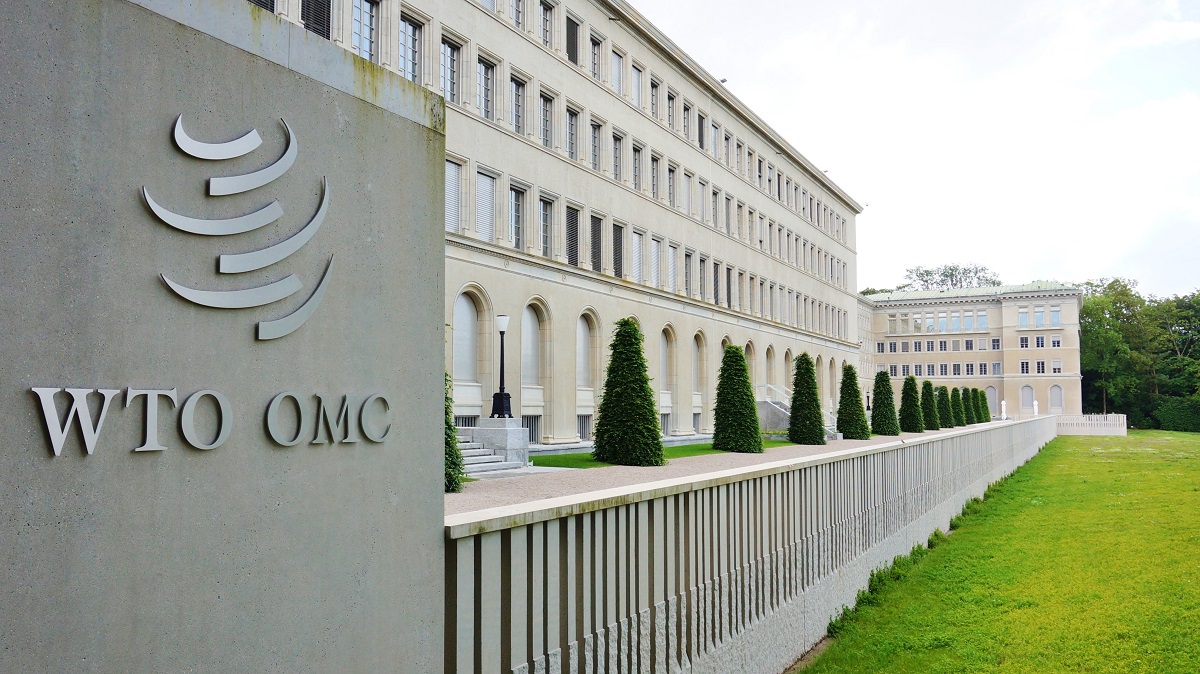
Many experts argue that the WTO requires modernization to address digital trade, technology restrictions, and geopolitical competition.
World Bank
The World Bank focuses on development financing, poverty reduction, and infrastructure investment in developing countries.
The organization highlights concerns that long-term global growth may remain weaker than historical averages.
Global Trade Trends in 2026
International trade remains a central component of globalization. However, global trade growth is slowing compared to previous decades.
The World Trade Organization predicts weaker merchandise trade growth due to higher tariffs, geopolitical tensions, and slowing global demand.
Several trends define global trade in 2026:
Increased Protectionism
Countries are imposing tariffs and trade restrictions to protect domestic industries. Economic nationalism has increased in many regions.
Strategic Trade Policies
Governments are prioritizing sectors considered strategically important, including:
- Semiconductors
- AI technology
- Defense manufacturing
- Rare earth minerals
- Renewable energy equipment
South-South Trade Expansion
Trade among developing countries has expanded rapidly. According to UNCTAD, South-South trade has become an important engine of global commerce.
AI-Related Trade Boom
Demand for AI chips, cloud infrastructure, and digital equipment contributed to strong trade growth during recent years.
The Role of China in the Global Economy
China remains one of the most influential economies in globalization. Despite slower growth compared to earlier decades, China continues to dominate global manufacturing and export sectors.
China’s economic strategies include:
- Belt and Road Initiative
- Technological self-reliance
- Green energy investment
- Expansion of yuan-based financial systems
At the same time, trade tensions between China and Western countries continue to reshape global supply chains.
Many multinational companies are reducing overdependence on China while still maintaining economic partnerships with Chinese markets.
The United States and Economic Leadership
The United States remains the largest advanced economy and a global technological leader.
Major strengths include:
- AI innovation
- Financial markets
- Digital corporations
- Military influence
- Research and development
The US economy benefits from strong technology investment but faces challenges such as inflation control, labor shortages, and trade conflicts.
American trade policies increasingly combine globalization with strategic competition, especially regarding China and advanced technologies.
India’s Growing Importance in Globalization
India has emerged as one of the fastest-growing major economies in 2026.
Several factors contribute to India’s rising global role:
- Large young population
- Expanding digital economy
- Manufacturing growth
- Startup ecosystem
- IT service exports
India benefits from supply-chain diversification as global companies seek alternatives to China.
The country is also becoming a major player in fintech, renewable energy, pharmaceuticals, and software services.
India’s participation in global digital trade and e-commerce continues to expand rapidly.
Globalization and Labor Markets
Globalization affects employment in both positive and negative ways.
Positive Effects
- Creation of new industries
- Expansion of international business opportunities
- Growth of digital jobs
- Increased foreign investment
- Skill development
Negative Effects
- Job displacement due to automation
- Wage inequality
- Outsourcing-related unemployment
- Informal labor exploitation
In 2026, artificial intelligence and automation are transforming labor markets worldwide. Many repetitive jobs are being replaced by machines, while demand for digital skills is increasing.
Remote work has also globalized labor markets. Companies can now hire workers from different countries through online platforms.
Inflation and Global Economic Stability
Inflation remains a significant issue in many economies. Energy prices, geopolitical conflicts, supply-chain disruptions, and climate-related shocks contribute to price instability.
The IMF notes that prolonged geopolitical conflicts could increase inflation and reduce global growth further.
Central banks continue using monetary policies such as interest rate adjustments to control inflation.
However, higher interest rates can slow economic growth and increase debt burdens in developing countries.
Globalization and Inequality
One of the biggest criticisms of globalization is rising inequality.
Global Inequality
Some countries have benefited enormously from globalization, while others remain economically marginalized.
Domestic Inequality
Within countries, wealth concentration has increased. Highly skilled workers and multinational corporations often benefit more than low-income populations.
Digital inequality is also becoming important. Countries with weak technological infrastructure risk falling behind in the global economy.
Environmental Challenges and Sustainable Development
Globalization has contributed to environmental problems such as:
- Climate change
- Pollution
- Deforestation
- Resource depletion
As a result, sustainability has become central to economic policy.
Governments and corporations are investing in:
- Renewable energy
- Carbon reduction
- Green technology
- Sustainable agriculture
- Circular economy models
Environmental regulations increasingly influence international trade and investment decisions.
Financial Globalization in 2026
Global financial markets remain deeply interconnected.
Key trends include:
Digital Payments
Cashless transactions and mobile banking have expanded worldwide.
Cryptocurrency and Digital Currency
Many governments are exploring Central Bank Digital Currencies (CBDCs).
Cross-Border Investment
Foreign direct investment continues to shape industrial development, although geopolitical uncertainty affects investment flows.
Global Debt Concerns
Many developing countries face rising debt burdens due to high borrowing costs and economic slowdown.
Geopolitical Tensions and Economic Fragmentation
Globalization in 2026 is strongly influenced by geopolitical conflicts.
Major tensions include:
- US-China rivalry
- Middle East conflicts
- Russia-West relations
- Technology sanctions
- Energy security competition
These tensions increase uncertainty in trade, energy markets, and investment systems.
The world economy is becoming partially fragmented into competing economic blocs.
Future of Globalization
The future of globalization will likely be different from earlier decades.
Several possible trends may shape the coming years:
Smarter Globalization
Countries may support globalization while protecting strategic sectors.
Regional Economic Systems
Regional trade partnerships may become more important than purely global networks.
AI-Driven Economic Integration
Artificial intelligence will continue transforming productivity, trade, and labor systems.
Sustainable Globalization
Environmental sustainability may become a core principle of future economic policies.
Digital Economic Expansion
Digital services and virtual economies will continue growing rapidly.
Conclusion
Globalization and the world economy in 2026 reflect both opportunity and uncertainty. Economic integration continues through trade, technology, finance, and digital communication, but the nature of globalization is changing significantly.
The modern global economy is shaped by artificial intelligence, geopolitical tensions, environmental concerns, regional partnerships, and technological competition. Countries are no longer pursuing unlimited economic openness without restrictions. Instead, governments aim to balance national security, economic resilience, and international cooperation.
Despite trade conflicts and economic fragmentation, globalization remains a powerful force connecting societies and markets. Developing countries such as India are gaining greater importance in the global economy, while digital technologies are transforming production, trade, and labor systems.
The future of globalization will depend on how nations manage technological innovation, climate change, inequality, and geopolitical rivalry. If international cooperation strengthens, globalization can continue promoting economic development and global prosperity. However, if conflicts and protectionism intensify, the world economy may face slower growth and greater instability.
The global economy of 2026 therefore stands at a critical turning point between deeper cooperation and increasing fragmentation. Policymakers, businesses, and societies must adapt carefully to this evolving economic landscape.
FAQs
1. What is meant by the world economy?
The term “world economy” refers to the interconnected economic activities of all countries through trade, finance, investment, production, and technology exchange.
2. How is globalization influencing the world economy in 2026?
Globalization is shaping the world economy through digital trade, AI technology, international investment, and global supply chains that connect businesses and consumers worldwide.
3. Why is the world economy becoming more digital?
The world economy is becoming more digital because of the growth of e-commerce, fintech, artificial intelligence, remote work, and cloud-based business systems.
4. What role does artificial intelligence play in the world economy?
Artificial intelligence increases productivity, automates industries, improves business efficiency, and creates new economic opportunities in the modern world economy.
5. How do geopolitical tensions affect the world economy?
Geopolitical conflicts create uncertainty in trade, energy prices, investment, and international cooperation, which can slow the growth of the world economy.
6. Why are supply chains important in the world economy?
Supply chains help move goods, services, and raw materials across countries, making them essential for global production and trade in the world economy.
7. How does inflation impact the world economy?
Inflation reduces purchasing power, increases production costs, and affects international trade and investment across the world economy.
8. What is the role of developing countries in the world economy?
Developing countries contribute to the world economy through manufacturing, labor supply, digital services, agriculture, and growing consumer markets.
9. How is India contributing to the world economy in 2026?
India contributes to the world economy through IT services, digital innovation, manufacturing growth, startup development, and international trade expansion.
10. What are the major challenges facing the world economy?
Major challenges include inflation, climate change, geopolitical tensions, debt crises, unemployment, and economic inequality.
11. How does climate change influence the world economy?
Climate change affects agriculture, energy systems, industrial production, and global trade, making sustainability an important issue for the world economy.
12. What is regionalization in the world economy?
Regionalization means countries increasingly forming regional trade partnerships and economic blocs to strengthen economic cooperation and reduce risks.
13. Why is trade important for the world economy?
Trade allows countries to exchange goods and services, improve productivity, create jobs, and increase economic growth within the world economy.
14. How do multinational corporations affect the world economy?
Multinational corporations influence the world economy through foreign investment, employment generation, technological innovation, and global market expansion.
15. What is the future of the world economy?
The future of the world economy will likely involve digital transformation, green energy investment, AI-driven growth, and stronger regional economic partnerships.
2 thoughts on “Globalization and the World Economy in 2026”